
Drug-resistantHaemophilus influenzae
What you need to know
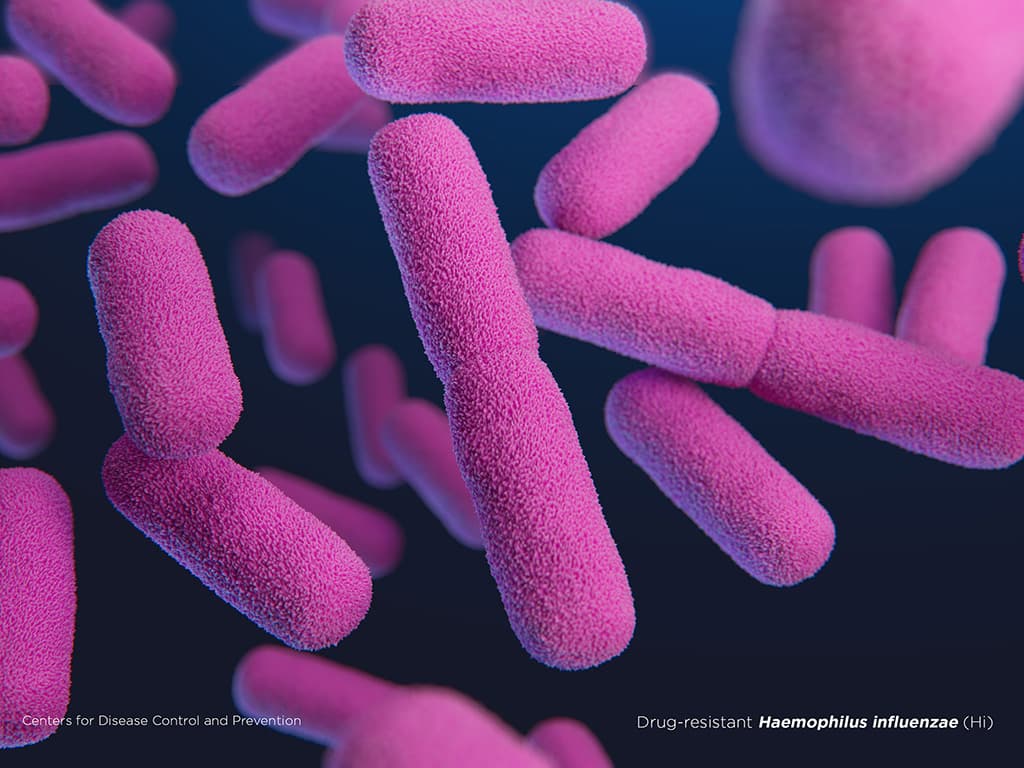
Haemophilus influenzae (Hi) bacteria live in people's noses and throats. Hi bacteria spread through respiratory droplets from coughing or sneezing, close contact with an infected person, and from people who are not sick but have the bacteria in their nose or throat. Hi bacteria are normally harmless, but they can spread to other parts of the body and cause infections ranging from mild (e.g., ear infections) to serious (e.g., bloodstream infections, pneumonia). Hi can cause invasive infections, which happen when Hi bacteria are found in normally sterile (free from germs) body sites, and can affect the bloodstream and cause meningitis (swelling of the lining of the brain and spinal cord). Hi infections can lead to sepsis (the body's extreme response to an infection), long-term health problems, or death.
What we know about resistance
Hi resistance to ampicillin, amoxicillin, and penicillin is now common. Resistance to the combination drug amoxicillin-clavulanate remains uncommon but is increasing and may make treatment of routine infections more difficult. For invasive Hi disease, ceftriaxone is the preferred antibiotic treatment until laboratory results are available. Treatment can be changed to ampicillin if laboratory tests show this antibiotic will be effective. Although resistance to ceftriaxone has been rarely identified in the United States, ongoing monitoring of resistance patterns is important because ceftriaxone-resistant Hi disease has occasionally been reported in other countries, has fewer treatment options, and may be more severe. Resistance to rifampin, which is used as prophylaxis to prevent infections in people who are exposed to Hi, is very uncommon but may develop during prophylaxis.
What CDC is doing
Invasive Hi disease has been a reportable condition in the United States since 1991. CDC tracks invasive Hi disease using a combination of active and passive surveillance, leveraging Active Bacterial Core surveillance (ABCs) and the National Notifiable Diseases Surveillance System (NNDSS). Active surveillance involves public health officials contacting healthcare providers seeking reports, while diseases are reported by healthcare providers through passive surveillance. CDC receives isolates (pure samples of Hi) from invasive Hi disease through ABCs and the H. influenzae Pediatric Supplemental Surveillance programs. CDC also uses whole genome sequencing to detect and identify mutations associated with resistance.