
Nontuberculous mycobacteria
What you need to know
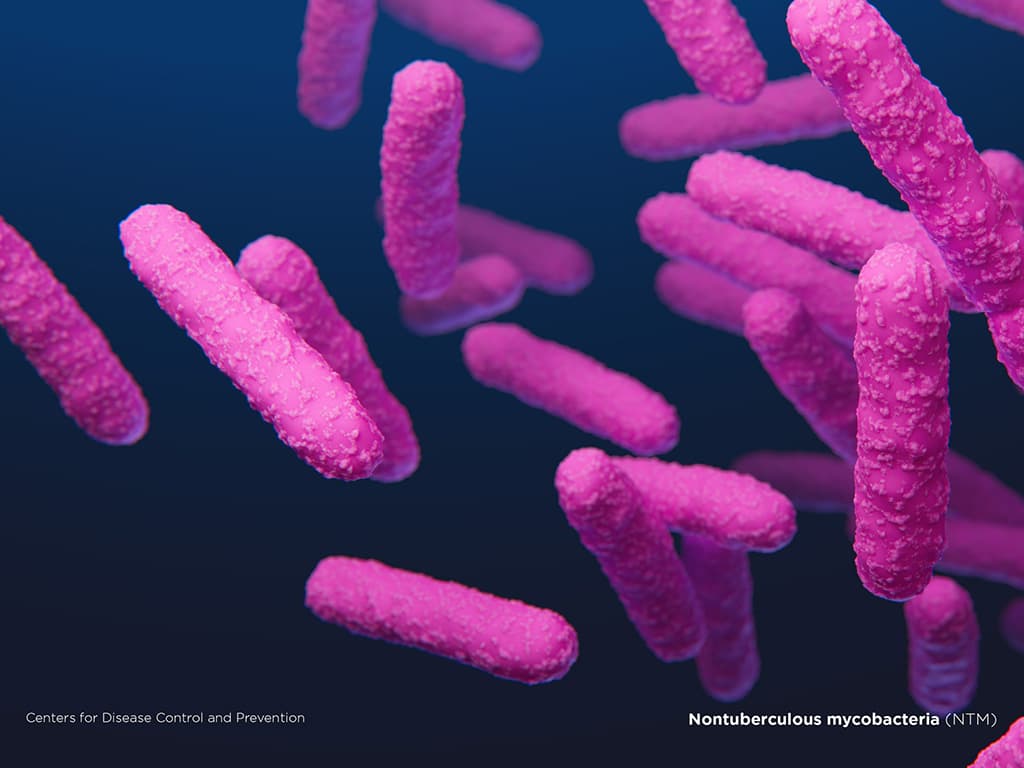
Nontuberculous mycobacteria (NTM) are common bacteria in the environment, found in soil, dust, and water. NTM can live in water or on surfaces in moist environments, such as inside pipes that carry water through buildings.
Most healthy people in the community who are exposed to NTM will not develop an infection. When NTM cause an infection, parts of the body that can be affected include the lungs, blood, lymph nodes, and skin and soft tissues. These infections can be slow to develop and may not be diagnosed until they become severe.
In healthcare settings, patients can develop NTM infections when NTM-contaminated hospital water gets into wounds or is on medical devices, such as equipment used during medical procedures or surgery. Most NTM infections, especially NTM lung infections, happen after exposure to NTM-contaminated water or other sources in the community. For example, when water contaminated with NTM turns into a fine mist or spray, like steam from a shower head, people can inhale the bacteria. NTM lung infections occur more often in people with existing lung disease or a weakened immune system.
What we know about resistance
There are many different types of NTM, and they are frequently resistant to many antibiotics, making infections more difficult to treat.
Treatment of an NTM infection typically requires consultation with an infectious disease and/or lung specialist. Treatment varies but usually requires a combination of two to three antibiotics for six months to a year or longer. Some people with an NTM infection need surgery to manage their infection. Some patients appear to recover from NTM but later have recurrences or relapses. These factors make NTM infections particularly challenging for healthcare providers and patients.
What CDC is doing
CDC tracks NTM infections through the Emerging Infections Program and works closely with health departments, other federal agencies, healthcare providers, and patients to prevent NTM infections.