


Tenzin's multidrug-resistant TB disease story
A Long Road to Recovery: Tenzin's Story
In this video, Tenzin shares his personal experience of being diagnosed with multidrug-resistant TB disease and managing treatment over the course of two years.
Threat Level: SERIOUS
In the United States:
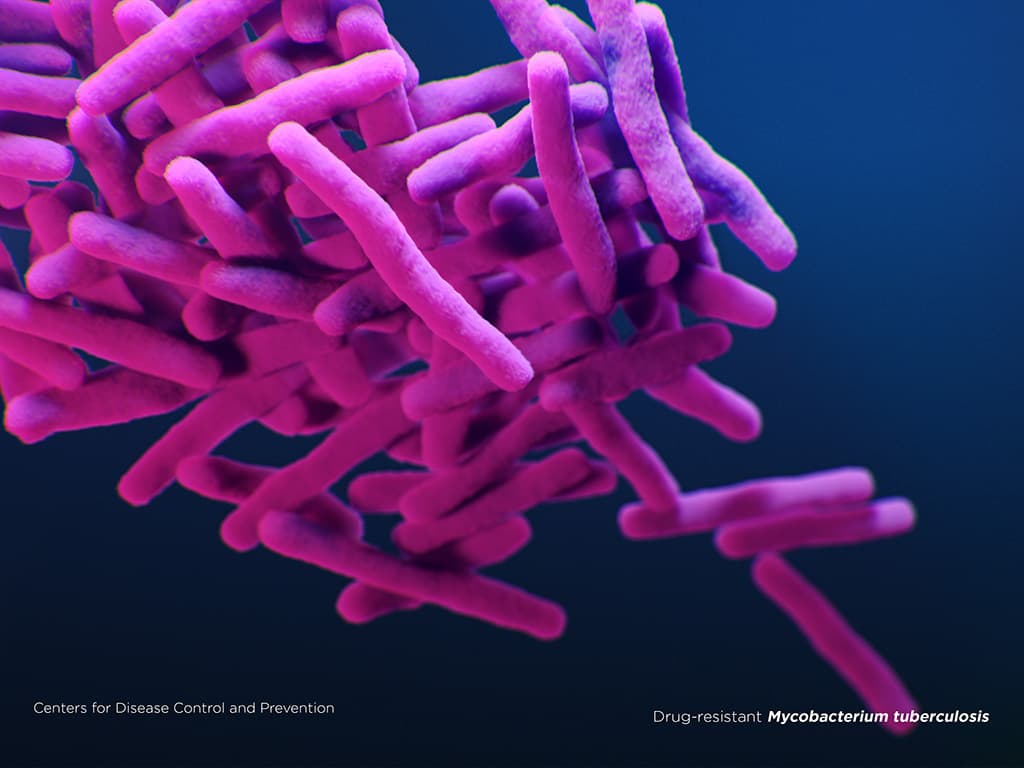
Tuberculosis (TB) is caused by bacteria called Mycobacterium tuberculosis, which are spread through the air from one person to the other. TB usually affects the lungs but can also affect other parts of the body or multiple parts of the body at the same time. If not treated properly, TB disease can be fatal.
Drug-resistant TB disease is categorized by the number and type of TB treatments to which the TB bacteria are resistant. First-line drug-resistant TB disease occurs when TB bacteria are resistant to at least one of the four main (first-line) medicines used in TB treatment regimens. Multidrug-resistant TB disease (MDR TB) is caused by TB bacteria that are resistant to the two most potent of the four main TB medicines. Extensively drug-resistant TB disease (XDR TB) is a rare and more serious type of MDR TB that is additionally resistant to a fluoroquinolone and at least one other second-line antibiotic used to treat TB disease.
Some people develop drug-resistant TB disease after they are exposed to drug-resistant TB bacteria. Drug-resistant TB disease can also occur when the medicines used to treat TB are misused or mismanaged. The most important way to prevent drug-resistant TB disease is for all people being treated for TB disease to take all TB medicine exactly as prescribed.
The percentage of multidrug-resistant TB (MDR TB) and extensively drug-resistant TB (XDR TB) disease cases have remained relatively stable since 2018.
In 2023, corresponding with an increase in overall cases of TB disease, the number of first-line drug-resistant cases of TB disease in the United States increased to over 1,000 cases. First-line drug-resistant TB disease is resistant to one or more of the four main drugs used to treat TB disease—isoniazid (INH), rifampin (RIF), pyrazinamide (PZA), and ethambutol (EMB).
In 2020, reported TB disease cases substantially decreased in the United States, possibly due to factors related to the COVID-19 pandemic, including undiagnosed cases (a result of decreased medical visits) and misdiagnosed cases. Effective TB program strategies in the United States ensured that the percentage of reported MDR TB (resistant to INH and RIF), and XDR TB disease cases (additionally resistant to at least fluoroquinolones and other second-line antibiotics) remained relatively consistent between 2018–2023.
In 2023, of the 6,964 TB disease cases in the United States that have drug susceptibility results for both INH and RIF, 14.8% were resistant to at least one of the four first-line TB drugs and 1.4% were multidrug-resistant.
Treatment costs for TB are substantial. In 2023, estimated costs for short-term treatment regimens for MDR TB ranged from $60,000 to $114,000 per case while long-term treatment regimen costs were $153,000 per case. For XDR TB, the costs of short-term treatment regimens ranged from $128,000 to $316,000 per case while long-term treatment regimen costs were $612,000 per case.
A Long Road to Recovery: Tenzin's Story
In this video, Tenzin shares his personal experience of being diagnosed with multidrug-resistant TB disease and managing treatment over the course of two years.
CDC funds health departments to find and treat cases of TB disease and monitor their close contacts. Thanks to continued investments in public health, the United States has one of the lowest rates of drug-resistant TB disease.
CDC's TB Laboratory serves as the National TB Reference Laboratory and as a source of innovation. CDC tests TB samples to rapidly detect drug resistance, which enables people with drug-resistant TB disease to begin effective treatments earlier and improves outcomes.
CDC's Antimicrobial Resistance Laboratory Network funds the National TB Molecular Surveillance Center to perform whole genome sequencing on all TB isolates (pure samples of TB bacteria) to identify transmission chains and detect outbreaks.
CDC works with academic institutions and health departments to conduct clinical trials and epidemiologic research that contribute to new diagnostics, treatments, and approaches for eliminating TB.
CDC supports the TB Centers of Excellence to offer training and support for healthcare professionals treating TB, particularly complex or drug-resistant TB disease.

Learn how CDC analyzed data to develop the information and estimates shared on this page.
Learn more about drug-resistant TB disease, how it spreads, who is at risk, and how to prevent and treat it.
Find information on TB data systems and TB data trends in the United States.
Access information and resources about how CDC's TB Laboratory supports health departments.
Read personal experiences of people diagnosed and treated for TB and the work of TB control professionals.