


Centers for Disease Control and Prevention

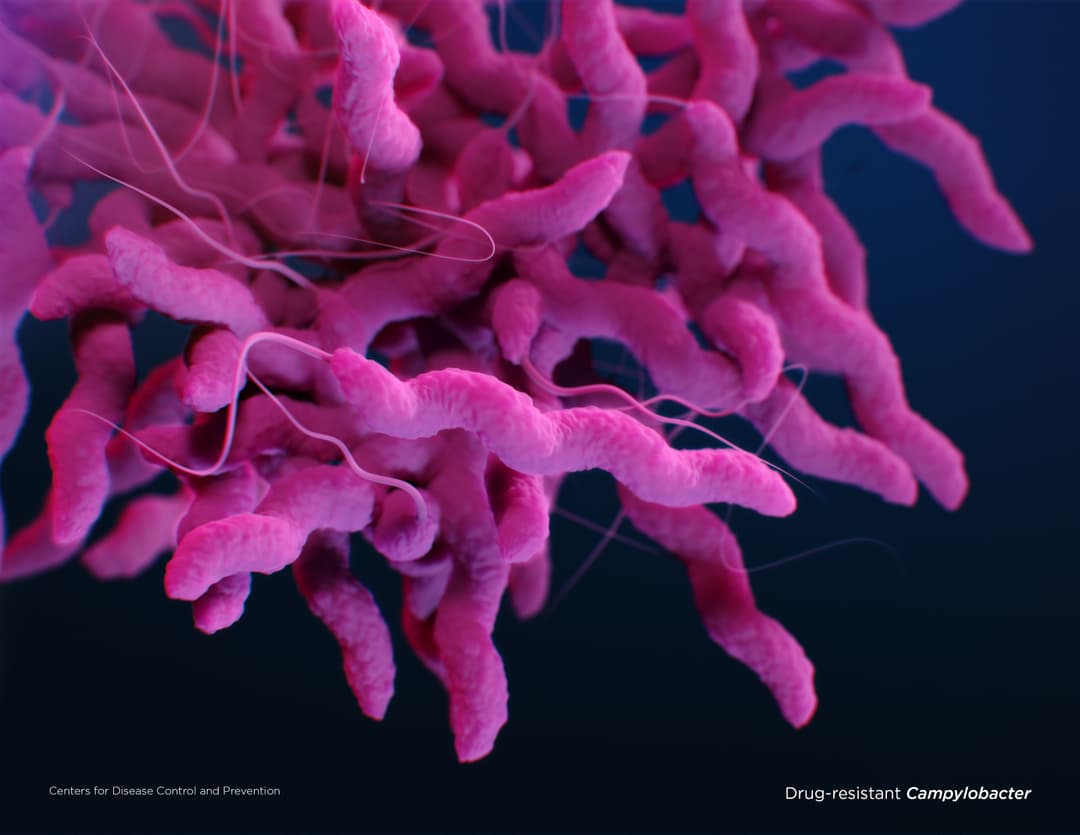
Drug-resistantCampylobacter

Threat Level: SERIOUS

In the United States in 2023:

CDC changed methodologies and data sources to produce the most comprehensive AR Threats Report to date. Direct comparison of this threat's data to previous reports is not recommended.

What you need to know

Campylobacter bacteria can cause diarrhea, fever, stomach cramps, and sometimes nausea and vomiting. Campylobacter are the most common cause of bacterial diarrheal illnesses in the United States. Campylobacter infection sometimes leads to complications, such as irritable bowel syndrome, arthritis, and nerve damage.

Campylobacter can spread through contaminated food and water and contact with animals, including pets. Many animals can carry and spread Campylobacter without showing signs of illness. Young children, older adults, and people with weakened immune systems are more likely to get a Campylobacter infection and to have severe illness.

Although most people with Campylobacter infection recover within seven days without antibiotic treatment, antibiotics are sometimes needed to treat severe Campylobacter infections. Some strains of Campylobacter are resistant to antibiotics, limiting treatment options. Healthcare providers can order laboratory tests to determine whether the Campylobacter infection is drug-resistant and which antibiotics might be effective.

Drug-resistant Campylobacter data

As resistance to certain antibiotics has increased since 2011, drug-resistant Campylobacter have caused an increasing number of infections and hospitalizations.

Estimated number of drug-resistant Campylobacter infections and hospitalizations by year in the U.S.

Drug-resistant Campylobacter caused an estimated 1.16 million infections in 2022 and 1.79 million infections in 2023. These bacteria caused an estimated 8,500 hospitalizations in 2022 and 13,300 hospitalizations in 2023.

Ciprofloxacin and azithromycin are two antibiotics recommended for treatment of Campylobacter infections. Resistance to these antibiotics indicates that infections might be more difficult to treat.

Percent resistant to ciprofloxacin and azithromycin by year among Campylobacter isolates tested in the U.S.

The percentage of Campylobacter isolates (pure samples of Campylobacter) resistant to ciprofloxacin increased from 25.2% in 2020 to a peak of 39.5% in 2023. In contrast, resistance to azithromycin has generally decreased over time from 4.3% in 2011 to 1.4% in 2023.

Antimicrobial susceptibility testing helps healthcare providers know which treatment to use for individual patients. As antimicrobial resistance increases, selecting an effective antibiotic when treatment is needed for Campylobacter infection is becoming more challenging, underscoring the importance of detecting and monitoring antimicrobial resistance. Timely reporting helps public health officials detect and respond to outbreaks of resistant infections, monitor resistance trends over time, inform treatment recommendations, and guide prevention efforts.

Responding to persisting Campylobacter strains linked to pet store puppies

Puppies eating food out of a bowl.

CDC uses the One Health approach, which recognizes that the health of people is closely connected to the health of animals and our shared environment, to identify and investigate outbreaks of drug-resistant Campylobacter.

After disease detectives identify the source of an outbreak, the public learns how to prevent illness, the investigation wraps up, and we expect to see fewer infections. However, some strains of bacteria continue to make people sick.
In 2017 and 2019, increases in reports of Campylobacter infections led CDC to identify two outbreaks of extensively drug-resistant (XDR) Campylobacter infections linked to puppies sold at pet stores. XDR Campylobacter infections may not be treatable with commonly used antibiotics, making them difficult or impossible to treat. Further investigation found that the XDR Campylobacter strains that caused the outbreaks were widespread in the dog breeding industry, making the strains harder to control.
In response, CDC enhanced its surveillance of XDR Campylobacter strains and included them in a group of reoccurring, emerging, and persisting (REP) bacterial strains. By monitoring XDR Campylobacter and other REP strains, CDC can better understand their sources, track how they change over time, and collaborate on ways to reduce their spread.
Recognizing that the health of people is closely connected to the health of animals and our shared environment, CDC is using the One Health approach to investigate XDR Campylobacter. Efforts of experts in human, animal, and environmental health, and data from CDC's enhanced surveillance, move us closer to stopping XDR Campylobacter infections and outbreaks.
How CDC combats drug-resistant Campylobacter

  • Detecting new and emerging resistance

    CDC partners with state and local health departments to track emerging resistance among human Campylobacter samples and makes this information available online.

  • Conducting research

    CDC and the Food and Drug Administration test alternative antibiotics that have successfully treated extensively drug-resistant Campylobacter infections to inform treatment recommendations.

  • Using data for action

    CDC shares Campylobacter resistance data publicly through the Bacteria, Enterics, Ameba, and Mycotics (BEAM) Dashboard, an interactive tool to access and visualize data that track Campylobacter.

  • Educating people at risk

    International travelers have an increased risk for drug-resistant Campylobacter infection from contaminated food and beverages. CDC shares safe food and water tips to educate international travelers about staying healthy.

  • Taking a collaborative One Health approach

    CDC recognizes that human health is closely connected to the health of animals and our shared environment. No single group can combat drug-resistant Campylobacter alone. Focusing on this interconnection encourages collaboration among experts in many fields related to human, animal, and environmental health. CDC provides resources for collaborators across key sectors, including recommendations for breeders, distributors, and pet store owners.

Drug-resistant Campylobacter resources

Illustration of Drug-resistant Campylobacter