

Centers for Disease Control and Prevention

Candida auris

Threat Level: URGENT

In the United States in 2023:

What you need to know

Candida auris (C. auris) is a type of fungus that can cause infections ranging from mild skin infections to severe, life-threatening illnesses, including bloodstream infections. C. auris most often affects patients in healthcare settings with serious underlying medical conditions who need complex medical care, including invasive devices like breathing tubes, feeding tubes, or catheters.

C. auris is often resistant to antifungal medications, meaning it has developed the ability to defeat the treatments designed to kill it, making infections difficult—and sometimes impossible—to treat.

C. auris spreads easily in healthcare settings and can cause preventable infections. People can also carry C. auris on their skin and in their body without having signs or symptoms of infection. They can spread C. auris to surfaces and objects around them, which can spread the germs to other people. Antifungal treatment is not recommended for patients who are carrying C. auris without symptoms of infection.

Healthcare providers should consider screening patients who may have been exposed to C. auris to identify those who may be carrying the germ and take action to prevent further spread. Infection control practices—such as hand hygiene, using gowns and gloves, and cleaning with approved disinfectant products—effectively prevent the spread of C. auris, especially when implemented before or at the first detection of C. auris cases.

Candida auris data

The number of clinical and screening cases of Candida auris (C. auris) reported to CDC has increased each year since C. auris was first reported in the United States in 2016. The increase in C. auris cases became more pronounced during the COVID-19 pandemic and has continued since.

Number of Candida auris clinical cases by year in the U.S.

The number of C. auris clinical cases in 2023 increased by more than 50% compared to the previous year. Since 2019, the number of clinical cases has increased nearly tenfold. These cases represent patients who had C. auris identified in a clinical sample tested to find out the cause of their infection. The sample was taken from either an invasive body site, such as blood or spinal fluid, or a non-invasive body site, like urine or a wound.

Antifungal drugs are vital for treating C. auris infections. In the United States, there are only three major classes of antifungal drugs approved for treating fungal infections like C. auris—azoles, polyenes, and echinocandins—but resistance to these antifungals is a growing problem that threatens patient survival. In 2023, 96% of C. auris samples were resistant to fluconazole (an azole), meaning fluconazole is not an effective treatment option for these C. auris infections. Additionally, 16% of samples were resistant to amphotericin B (a polyene), indicating emerging resistance to more than one class of antifungals. Resistance to echinocandins, the recommended first-line treatment, was observed in 1% of samples, but the number of these cases is increasing. Pan resistance (resistant to all three major classes) has been detected but is rare.

Number of Candida auris screening cases by year in the U.S.

The number of screening cases of C. auris reported to CDC has increased substantially over time, with a nearly 50% rise in 2023 compared with 2022. These cases occur in patients who receive a positive result from a skin swab collected for screening purposes and tested to determine if they have C. auris on their body, without signs or symptoms of infection. In response to the continued spread of C. auris, more screening efforts have been implemented across the country and have increased the detection of screening cases.

Getting ahead of a fast-spreading fungus
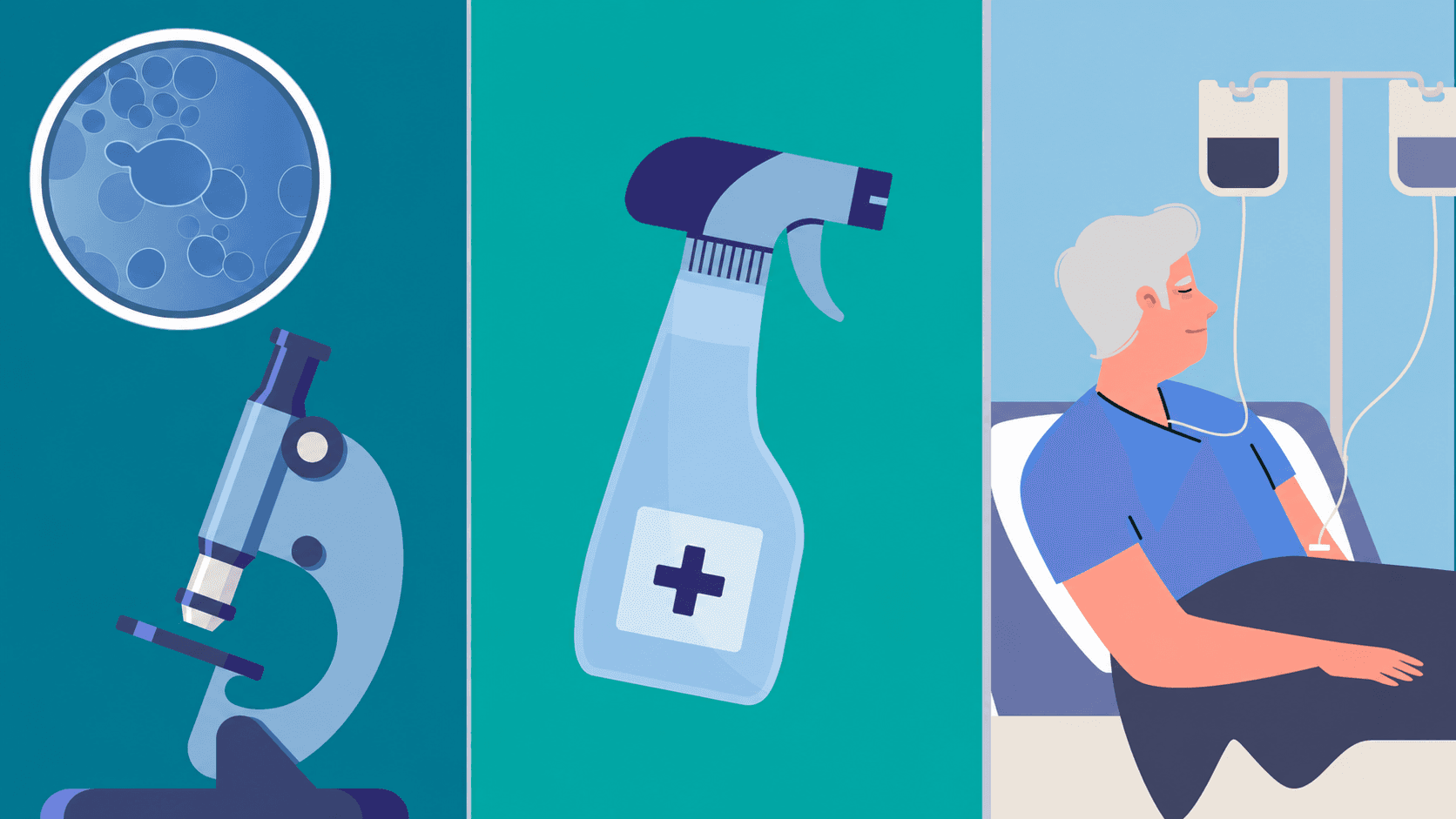
A microscope and germs, a spray bottle of disinfectant, a patient receiving IV treatment.

Implementation of infection prevention and control practices and collaboration between healthcare facilities and public health can help prevent C. auris transmission and protect patients.

In November 2022, the Mississippi State Department of Health (MSDH) identified the first locally acquired case of Candida auris (C. auris) in the state and immediately initiated a comprehensive public health response. MSDH worked with seven healthcare facilities to start screening, and within three months, an additional 42 patients were identified as screening cases. The healthcare facilities also reported eight clinical cases.
After review, MSDH's team identified barriers to C. auris infection prevention and control (IPC) at the facilities. Specifically, healthcare personnel needed training and resources to improve IPC practices targeting C. auris, access to approved disinfectants for C. auris, and effective communication systems for sharing information when transferring patients between facilities. The MSDH team worked with facilities to address these needs, educating healthcare personnel and teaching IPC strategies to prevent C. auris transmission. MSDH developed a package of resources, which included templates for communicating C. auris status during patient transfer and reminders about IPC measures to prevent spread.
This collaborative response between facilities and the health department led to a 78% reduction in new C. auris clinical cases in the three months that followed. This success highlights the effectiveness of C. auris containment strategies and shows the importance of ongoing efforts to protect patients from C. auris and other drug-resistant threats.

How CDC combats Candida auris

  • Supporting health departments

    CDC provides guidance and assistance for Candida auris (C. auris) infection prevention, control, and response. Since 2016, CDC subject matter experts have provided rapid technical assistance for at least 13 on-site investigations.

  • Conducting case-based surveillance

    CDC tracks clinical and screening cases of C. auris nationwide to guide targeted screening and prevention efforts.

  • Piloting an enhanced surveillance program

    CDC launched FungiSurv to better understand risk factors, transmission, and emerging resistance trends for C. auris and other fungal pathogens. As of April 2026, over 20 states shared detailed data on specific C. auris cases with CDC as part of the pilot.

  • Expanding lab capacity in states

    CDC's Antimicrobial Resistance Laboratory Network (AR Lab Network) provides essential fungal testing that is difficult to access elsewhere. As of 2025, 17 public health laboratories conducted screening for C. auris with more than 330,000 swabs tested since 2017. Seven regional labs conduct antifungal susceptibility testing on C. auris samples, which guides treatment decisions and supports monitoring of emerging resistance trends nationally.

  • Optimizing lab technology

    CDC uses genomic sequencing and develops new lab tests to track and control drug-resistant fungal pathogens. These tools enable earlier outbreak detection and more effective investigations. Through CDC's AR Lab Network, public health laboratories conducted C. auris whole genome sequencing with more than 10,000 clinical and screening isolates (pure samples of bacteria and fungi) sequenced between 2022 and late 2024.

Candida auris resources

Illustration for Candida auris
  • Data Methods

    Learn how CDC analyzed data to develop the information and estimates shared on this page.

  • Candida auris (C. auris)

    Find general information about C. auris, including resources for patient screening, strategies for reducing spread, and information for healthcare and lab professionals.

  • Tracking C. auris

    Access information on trends in C. auris case counts over time in the United States.

  • Fact Sheet: CDC Actions to Prevent the Spread of Antifungal Resistance

    Learn about the five strategic areas CDC uses to combat the spread of drug resistance in fungi: infection prevention, One Health disease surveillance, enhancement of advanced diagnostics and laboratory capacity, research initiatives, and international collaboration.