

CDC alerts healthcare providers, others to increase in dangerous Shigella infections

CDC collaborates with state and international public health agencies to disseminate tailored communications to ensure key audiences are aware of emerging drug-resistant threats and are prepared with steps to prevent and treat infections.
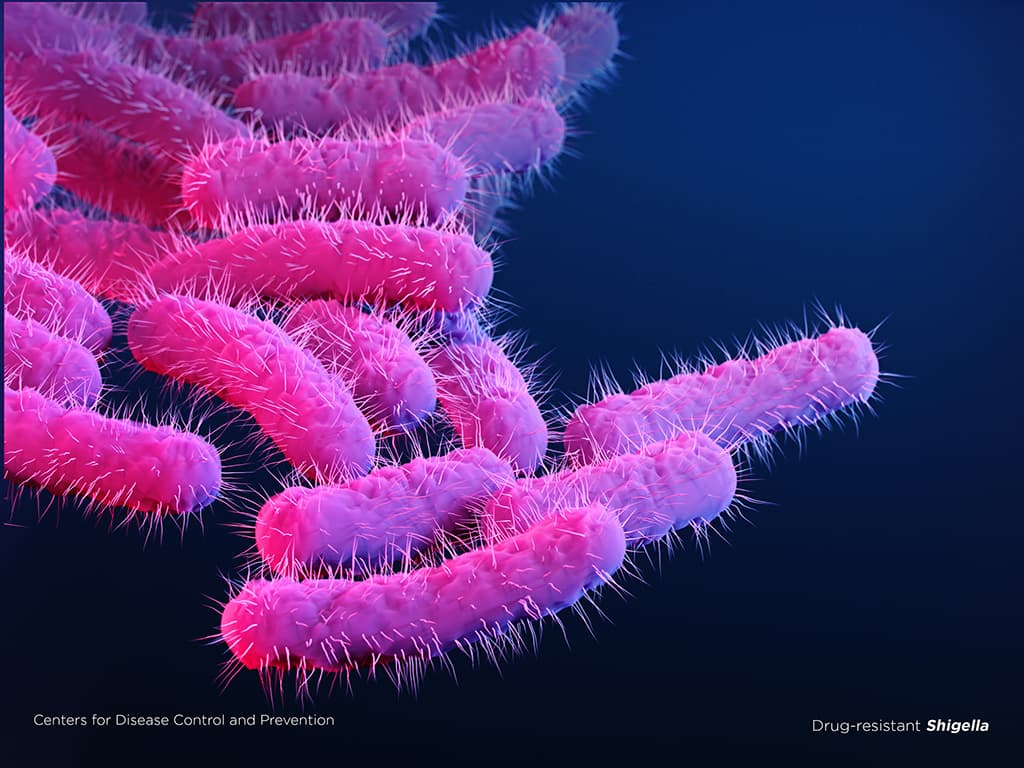
By 2023, CDC scientists had become concerned about increasing extensively drug-resistant (XDR) Shigella infections. XDR Shigella are resistant to all antibiotics typically used for treatment in the United States, which can limit treatment options. To raise awareness of this serious and emerging threat, CDC conducted targeted communication outreach. CDC sent a health advisory, with an estimated reach of more than one million people, including healthcare and public health professionals and the public. The advisory provided recommendations for each audience and advised people disproportionately affected by Shigella infections—particularly gay, bisexual, and other men who have sex with men and international travelers—to practice good hand hygiene and safer sex.
To reach these groups, CDC partnered with social media influencers. Their videos reached more than 22,000 people. Additionally, CDC's targeted social media posts and online ads garnered more than 22 million impressions.
CDC also collaborated with state and international public health agencies to provide information about XDR Shigella infections and answer questions in a webinar for healthcare professionals. Other CDC activities included presenting information on XDR Shigella infections at meetings and conferences, and in media interviews and podcasts.
These timely, tailored communications were designed to ensure key audiences were aware of XDR Shigella and prepared with steps to prevent and treat infections.