


Centers for Disease Control and Prevention

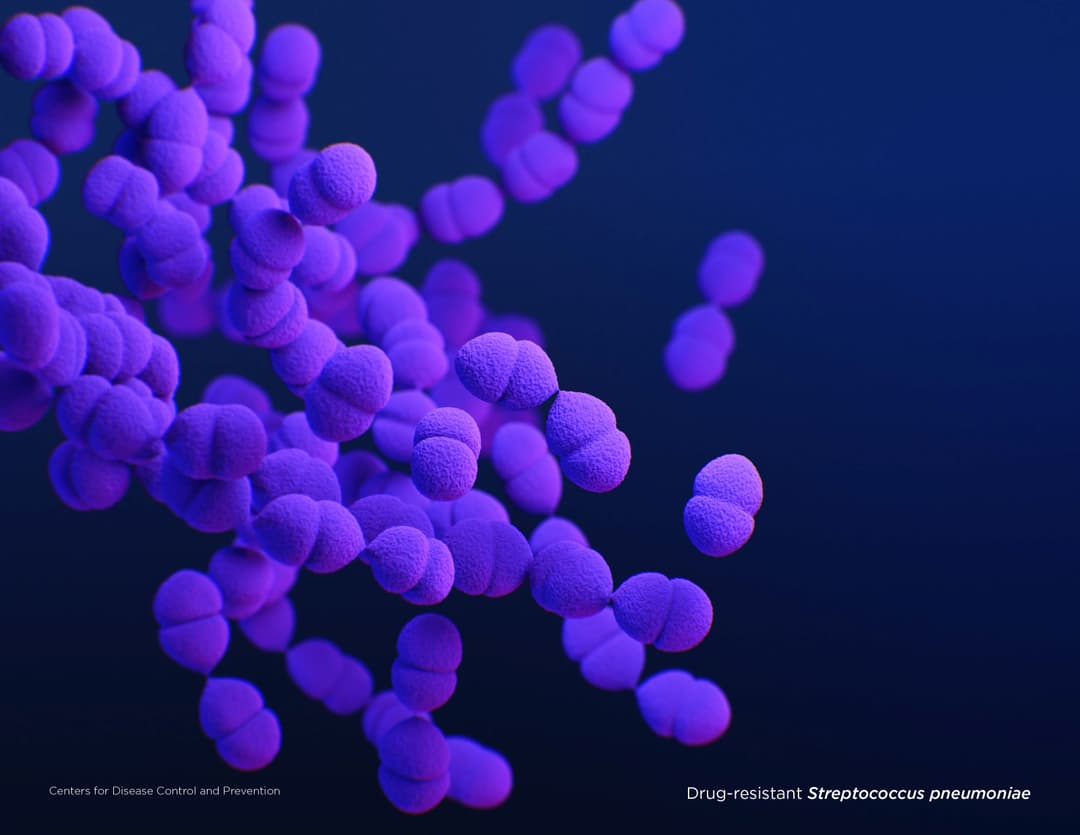
Drug-resistantStreptococcus pneumoniae

Threat Level: SERIOUS

In the United States in 2023:

CDC changed methodologies and data sources to produce the most comprehensive AR Threats Report to date. Direct comparison of this threat's data to previous reports is not recommended.

What you need to know

Streptococcus pneumoniae (S. pneumoniae) bacteria, also called pneumococcus, cause pneumococcal disease, bacterial pneumonia, meningitis, and ear, sinus, and bloodstream infections. People spread S. pneumoniae to others through direct contact with saliva or mucus that contain the bacteria. Age, underlying health conditions, and other risk factors can increase someone's risk for pneumococcal disease.

Healthcare providers use antibiotics to treat pneumococcal disease. However, some pneumococcal bacteria have become resistant to certain antibiotics used to treat these infections. Some people with resistant infections may need longer and more expensive treatments.

Vaccination is the best way to prevent pneumococcal disease. CDC recommends pneumococcal vaccination for people based on their age or if they have certain risk conditions.

Drug-resistant Streptococcus pneumoniae data

Streptococcus pneumoniae (S. pneumoniae) bacteria that are resistant to at least one antibiotic cause about two out of every five invasive S. pneumoniae infections. While progress has been made in reducing rates of drug-resistant S. pneumoniae infections, in large part due to pneumococcal vaccination, millions of Americans were affected in 2023.

Estimated number of drug-resistant Streptococcus pneumoniae infections by year and age group in the U.S.

The estimated number of drug-resistant S. pneumoniae infections was 2.8 million in 2022 and 2.6 million in 2023. These infections were split evenly between children younger than 18 years and adults 18 years and older. Most were non-invasive infections, such as otitis media (middle ear infection), sinusitis (infection or inflammation of the sinuses), pneumonia, bronchitis, and conjunctivitis (pink eye).

The estimated number of invasive drug-resistant S. pneumoniae infections was 10,709 in 2022 and 11,672 in 2023. The majority of these infections occur in adults. Invasive infections happen when S. pneumoniae bacteria spread to normally sterile (free from germs) body sites, such as blood, cerebrospinal fluid, or internal body sites like bone.

Estimated number of resistant and susceptible invasive Streptococcus pneumoniae infections and percent resistant by year in the U.S.

The estimated number of invasive S. pneumoniae infections, both susceptible (responsive to antibiotics) and drug-resistant, has stayed relatively steady since 2013, except during the COVID-19 pandemic when the overall number of invasive S. pneumoniae infections decreased, with a greater decline among susceptible infections. During 2013 to 2023, the estimated percentage of invasive drug-resistant S. pneumoniae infections was generally stable but declined to 35.2% in 2023 compared to 43.4% in 2021. As invasive S. pneumoniae infections increased in 2022 and 2023, more of the increase was due to susceptible strains.

Since 2000, childhood pneumococcal vaccination has successfully reduced S. pneumoniae infections across all ages, including infections caused by drug-resistant strains. However, invasive S. pneumoniae infections, complications, and deaths continue.

Vaccination: an effective infection prevention tool

A healthcare worker applying a small bandage to the upper arm of an older adult woman after a vaccination.

Pneumococcal conjugate vaccines have helped reduce drug-resistant pneumococcal infections.

Pneumococcal disease can be life-threatening, and children under five, adults 50 years or older, and people with underlying health conditions have an even greater risk of severe disease. Vaccines are available that help prevent pneumococcal disease caused by specific strains of Streptococcus pneumoniae (S. pneumoniae), including those that are drug-resistant. People who have been vaccinated are less likely to spread these bacteria. Preventing spread reduces drug-resistant S. pneumoniae infections among children and adults through herd immunity. When fewer people get these infections, it helps slow the emergence of drug-resistant strains because less antibiotic use is needed.
Since pneumococcal conjugate vaccines (PCVs) were first introduced in 2000, they have reduced drug-resistant invasive pneumococcal infections by more than 90% in children younger than five years old and by more than 60% in adults.
In recent years, newer PCVs that protect against additional S. pneumoniae strains have been licensed for use in children and adults. These newer vaccines show promise in continuing to lower rates of drug-resistant invasive pneumococcal infections. In addition to achieving high vaccination coverage, appropriate antibiotic use can also help slow the spread of drug-resistant pneumococcal infections.
How CDC combats drug-resistant Streptococcus pneumoniae

  • Supporting health departments

    CDC offers guidance and assistance to health departments to prevent, control, and respond to drug-resistant pneumococcal infections. This includes rapid, on-site technical assistance during outbreak investigations.

  • Conducting population- and laboratory-based surveillance

    CDC uses the Active Bacterial Core surveillance (ABCs) platform to conduct surveillance for invasive pneumococcal infections. ABCs, part of the Emerging Infections Program, operates in 10 sites across the United States, covering a population of 35 million people for surveillance of invasive pneumococcal infections. Through surveillance, CDC can identify and investigate invasive pneumococcal infections and perform antimicrobial susceptibility testing (AST) on all isolates (pure samples of a germ). CDC uses this established, long-term surveillance platform to monitor trends by estimating annual incidence of invasive pneumococcal disease and drug-resistant infections.

  • Expanding state public health lab capacity

    CDC's Antimicrobial Resistance Laboratory Network (AR Lab Network) conducts pneumococcal isolate testing, prioritizing samples from pediatric patients located outside the ABCs catchment area. AR Lab Network testing supports direct public health response and provides essential services such as AST to monitor and track trends.

  • Optimizing lab technology

    CDC uses whole genome sequencing to monitor the spread of drug-resistant Streptococcus pneumoniae (S. pneumoniae) with higher accuracy and to detect any emerging strains that may be drug-resistant. This technology helps CDC detect outbreaks earlier and investigate them more effectively, and to understand transmission patterns and emerging resistance trends. As part of ABCs, more than 23,000 pneumococcal genomes, or all the DNA in a cell, have been analyzed and are available to the research community. The platform improves researcher knowledge of pneumococcal disease, tracks drug resistance, and guides vaccine development.

  • Evaluating vaccine effectiveness

    Using invasive pneumococcal disease surveillance data, CDC evaluates vaccine effectiveness as a tool for preventing invasive pneumococcal infections caused by strains included in pneumococcal vaccines, including drug-resistant invasive infections.

Drug-resistant Streptococcus pneumoniae resources

Illustration of Drug-resistant Streptococcus pneumoniae